






Mentoring Agreement Template: Structure, Clarity, and Real Growth for Mentor–Mentee Relationships
 7 Downloads
 Company Formation & Governance Documents, Education & Training Agreements
  March 4, 2025
 FreshDox
Mentoring Agreement Template: Structure, Clarity, and Real Growth for Mentor–Mentee Relationships
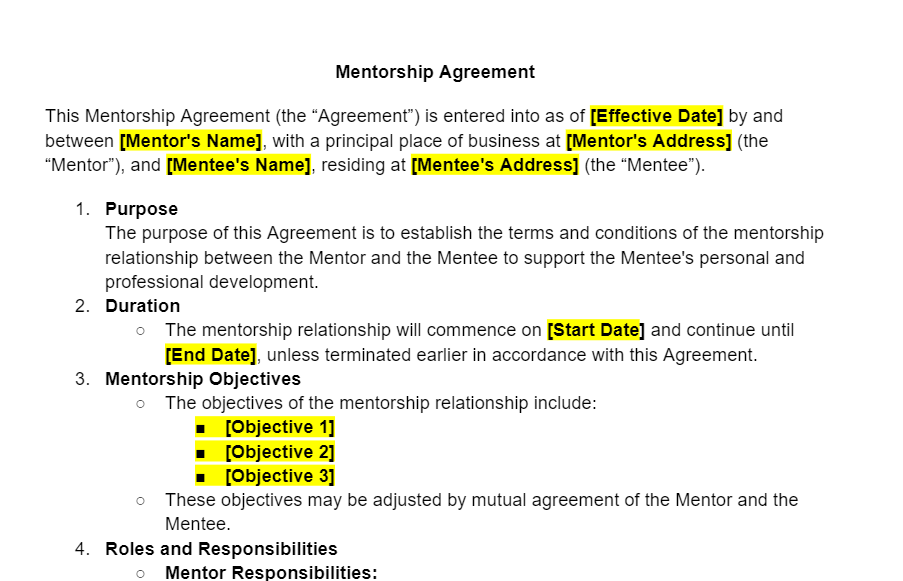
A mentoring agreement gives structure and clarity to a mentor–mentee relationship. Instead of relying only on verbal understanding, it turns the expectations, goals, and boundaries of both people into a written, actionable plan. Once signed, the agreement becomes a formal acknowledgment that both mentor and mentee are committed to the mentorship process.
With a clear mentoring agreement template, the partnership stops being informal or ad hoc and starts operating like a focused development program. The document outlines what each person will contribute, how progress will be tracked, and how long the mentoring relationship will last. This written structure builds accountability and dramatically improves the chances of achieving meaningful professional growth.
For organizations, using a standard mentor–mentee agreement form also ensures consistency across all mentoring programs, reduces misunderstandings, and protects both parties by setting expectations from day one.
Why a Mentoring Agreement Matters
At its core, a mentoring agreement is an affirmation of mutual commitment. The mentor commits time, experience, and honest feedback; the mentee commits effort, openness, and follow-through. By putting this understanding into a mentorship agreement, both parties are reminded that this is not a casual arrangement, but a focused development partnership.
A well-drafted mentoring agreement helps to:
- Set healthy boundaries and clearly communicate expectations in the relationship.
- Establish communication and meeting protocols, including confidentiality rules.
- Define the format, location, and frequency of mentoring sessions.
- Document specific development goals and success measures for the mentee.
- Provide a simple process to address conflicts, misalignment, or the need to end the mentorship.
When these points are captured in writing, both mentor and mentee can focus on what matters most: learning, growth, and practical progress, instead of debating logistics or assumptions later.
Who Drives the Mentoring Agreement Once It’s Signed?
Once the mentoring agreement form is signed, the mentee usually takes the lead in managing the relationship. This includes scheduling meetings, preparing questions or topics, and updating the mentor on progress and challenges.
The mentor, in turn, provides guidance, constructive feedback, and perspective. Where the mentee struggles to move forward, the mentor may take a more active role—suggesting exercises, recommending resources, or reframing goals based on their experience.
Because the agreement already defines goals and expectations, the mentor can quickly align their support with what the mentee is trying to achieve. The result is a more purposeful and productive mentoring relationship.
What Should a Mentoring Agreement Include?
A strong mentoring agreement acts as a roadmap for the entire mentorship program. While every organization and pairing may adapt the details, most well-structured agreements cover at least the following elements:
- Shared goals for both mentor and mentee.
- Clear expectations about roles, responsibilities, and boundaries.
- Session schedules, including frequency, duration, and format.
- Preferred communication channels and response-time norms.
- Confidentiality commitments and how sensitive information will be handled.
Using a mentoring agreement template from FreshDox helps ensure these core sections are not missed and keeps every mentoring relationship aligned with organizational standards and best practices.
Clarifying Roles and Responsibilities
Defining roles upfront prevents confusion later. A mentoring agreement should outline practical details such as:
- How often the mentor and mentee will meet and for how long.
- Whether meetings will be in-person, virtual, or hybrid.
- Any forms, reports, or progress logs expected as part of the program.
- Professional behaviour and etiquette expectations during interactions.
- Assignments or preparation to be completed between sessions.
- Clear boundaries on topics that are off-limits or out of scope.
With responsibilities clearly documented, both parties know what “showing up fully” looks like and can hold themselves accountable.
Setting Goals That Guide the Relationship
No mentoring agreement is complete without specific, realistic goals. These might include:
- Building specific skills (e.g., leadership, communication, project management).
- Preparing for a promotion, role change, or new responsibility.
- Improving confidence in decision-making or stakeholder management.
- Planning a long-term career path or transition.
Documenting these objectives in the agreement gives both mentor and mentee a shared “north star.” Many organizations also attach an individual development plan that lays out milestones, activities, and check-in points to track progress over time.
Defining Expectations
Expectations are where a lot of mentoring relationships either thrive or struggle. Your mentoring agreement should answer practical questions such as:
- What does the mentor reasonably expect from the mentee (e.g., preparation, openness to feedback)?
- What does the mentee expect from the mentor (e.g., honesty, availability, introductions)?
- Who sets the agenda for each meeting—mentee, mentor, or both?
- How will progress and action items be documented and reviewed?
- Are there specific milestones or timelines that both parties agree to monitor?
Writing these points down avoids disappointment and builds a mature, respectful working relationship between mentor and mentee.
Scheduling and Time Commitments
Even the best mentoring intentions fail if scheduling is unrealistic. The agreement should specify:
- Start and anticipated end date of the mentoring relationship.
- Typical frequency (e.g., bi-weekly, monthly) and length of meetings.
- How rescheduling and cancellations will be handled.
- Any blackout periods (busy seasons, exams, travel, etc.).
For cross-location or cross-time-zone mentoring, flexibility and clarity are especially important. Using calendar tools and agreed time slots keeps the relationship consistent and respectful of both schedules.
Preferred Communication Channels
A simple communication plan can prevent silence, confusion, or frustration. In the mentoring agreement, specify:
- How mentor and mentee will communicate between meetings (email, messaging app, phone, video call).
- Typical response time expectations (e.g., within 48 hours on weekdays).
- How progress updates will be shared (short summary emails, shared documents, etc.).
Clarity on communication reduces friction and keeps the relationship active even between formal sessions.
Feedback, Concerns, and Complaints
Feedback is the engine of a successful mentoring program. The agreement can briefly outline how:
- Mentors will provide constructive, respectful feedback.
- Mentees can share what is or is not working for them.
- Either party can raise concerns if the relationship is no longer effective.
- The program coordinator or HR (if applicable) can be involved in resolving issues.
Having a simple pathway for raising concerns makes it easier to adjust or, if necessary, gracefully end the mentoring relationship.
Confidentiality and Trust
A mentoring agreement should clearly spell out what information is considered confidential and how it will be protected. This commonly covers:
- Workplace issues, performance feedback, and personal challenges shared by the mentee.
- Organizational information or insights shared by the mentor.
- Any limits to confidentiality (for example, where compliance or legal obligations apply).
You can also outline what happens in case of a serious breach of confidentiality. Addressing this upfront helps both parties feel safe to share honestly.
Reviewing and Updating the Agreement
A mentoring agreement is not carved in stone. Over time, goals may evolve, roles may shift, or schedules may need to change. Many organizations recommend reviewing the mentoring agreement every 3–6 months to:
- Update goals or timelines based on progress.
- Adjust meeting frequency or format.
- Reconfirm commitment from both sides.
Treating the agreement as a living document makes the mentorship more resilient and relevant.
Customizing a Mentoring Agreement with a Template
Using a professionally drafted mentoring agreement template from FreshDox saves time and ensures you do not miss important clauses. You get a structured document with all the essential sections—goals, expectations, scheduling, communication, confidentiality, and review—ready to be tailored to each unique mentor–mentee pairing.
The advantage of a template-based mentorship agreement is simple: it gives you a solid legal and practical foundation, while still allowing flexibility. Organizations can standardize their mentoring programs, and individuals can adapt the wording to suit their specific relationship and development needs.
Download a Free Mentoring Agreement Template with a FreshDox Trial
With FreshDox, you can create a clear, professional mentoring agreement in minutes instead of starting from a blank page. Sign up for a free 7-day trial and get instant access to a fully customizable Mentoring Agreement Template, available in Word and PDF formats.
During your trial, you can explore our complete library of business and HR templates—employment forms, coaching agreements, performance review forms, and more—designed by professionals to support structured, compliant, and effective workplace processes.
Start your free trial with a Basic or Premium account on FreshDox, download your mentoring agreement form, and give your mentor–mentee relationships the clarity and confidence they deserve.
Popular searches:
- Mentoring Agreement Template: Structure, Clarity, and Real Growth for Mentor–Mentee Relationships pdf
- Mentoring Agreement Template: Structure, Clarity, and Real Growth for Mentor–Mentee Relationships sample
- Mentoring Agreement Template: Structure, Clarity, and Real Growth for Mentor–Mentee Relationships download
- Mentoring Agreement Template: Structure, Clarity, and Real Growth for Mentor–Mentee Relationships format
- Mentoring Agreement Template: Structure, Clarity, and Real Growth for Mentor–Mentee Relationships template
- Mentoring Agreement Template: Structure, Clarity, and Real Growth for Mentor–Mentee Relationships word
- Mentoring Agreement Template: Structure, Clarity, and Real Growth for Mentor–Mentee Relationships free

 Download Word Template
 Download PDF Template
Related Templates
Discover more templates that align with your needs and preferences.








Ready to Sign Up?
Start your 7-day free trial and access professionally drafted legal documents built for business use.
- Cancel any time
- 7-day free trial
- From 300+ Customer Reviews
