






Disciplinary Policy Template: Complete HR Guide for Fair Workplace Discipline
 8 Downloads
 Company Formation & Governance Documents
  March 8, 2025
 FreshDox
A clear Disciplinary Policy Template is one of the key tools that drives organizational success. A well-defined disciplinary policy supports discipline, builds unwavering determination, connects goals with day-to-day performance and lays the foundation for sustained excellence and measurable achievements.
That is why every organization needs a professionally drafted Disciplinary Policy Template. It provides a simple, structured blueprint for addressing employee misconduct, unprofessional behavior and poor performance. Used correctly, it empowers an organization to build a safe, productive and respectful workplace where employees are treated fairly and consistently.
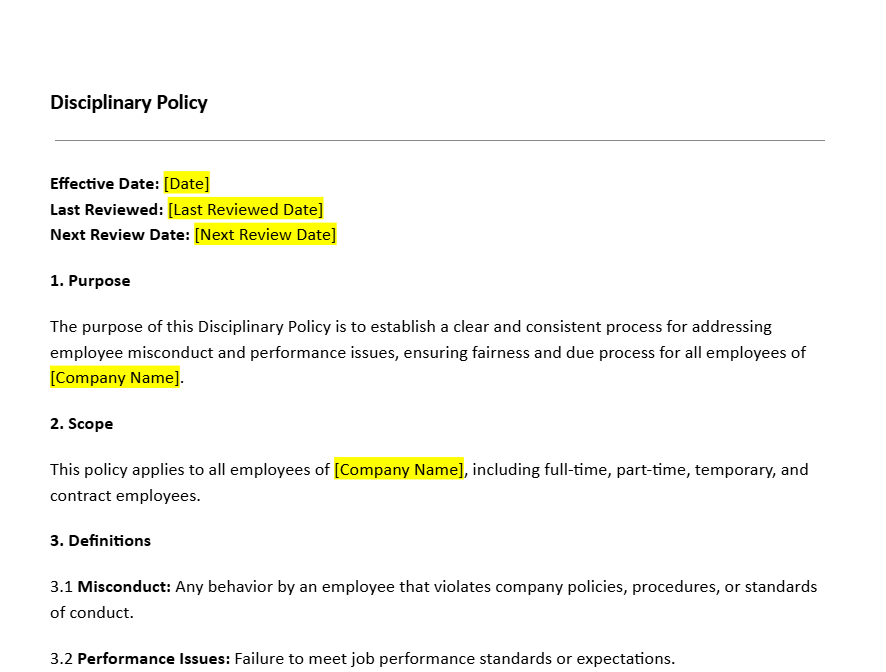
A Disciplinary Policy Template is a written document that sets out an organization’s disciplinary rules and procedures for both new and existing employees. It is often included in the employee handbook, displayed on notice boards or published on the company’s intranet or official website. The policy offers clear guidelines for dealing with behavior that may warrant disciplinary action, such as fraudulent conduct, bullying or intimidation, discrimination, sexual harassment, repeated absenteeism, inadequate performance and other forms of misconduct.
This formal document provides a step-by-step outline of the disciplinary process—from reporting misconduct and investigating complaints to deciding on appropriate action, issuing warnings or termination, and documenting the incident and final decision. The nature and intensity of the misconduct guide the level of disciplinary action taken.
In practice, a Disciplinary Policy Template becomes a foundational HR document. It offers an organized and tested framework that promotes transparency, fairness, consistency and accountability. It boosts morale and integrity among employees by clearly stating what behaviors are expected and what the consequences are for unprofessional or unacceptable conduct.
Importantly, a disciplinary policy template is not meant to be a purely punitive tool. It is a planned, structured approach to maintaining discipline while acknowledging that human beings can make mistakes. A good disciplinary policy gives employees an opportunity to correct issues, receive constructive feedback and improve their behavior. It also helps ensure that your organization follows applicable employment and labor laws.
Even though it may not be the most “comfortable” policy to enforce, a clear disciplinary policy is one of the most effective ways to address unwanted behavior. It shows your team that the organization takes employee safety, dignity and fairness seriously—and that misconduct will be handled in a professional, lawful and consistent manner.
In the sections below, we will see why a Disciplinary Policy Template is crucial for your business, explore its key elements, understand the risks of not having a proper policy in place, and finally introduce you to the reliable and comprehensive Disciplinary Policy Template from FreshDox.
Why You Need a Disciplinary Policy Template
Providing clear and transparent guidelines through a Disciplinary Policy Template makes employees fully aware of what is expected from them at the workplace. When you follow a structured approach to manage performance issues, misconduct or violations of company rules, you are able to create a safe, hassle-free and productive environment that supports teamwork, collaboration and high performance. A carefully planned disciplinary policy is beneficial for both employees and employers.
Although a disciplinary policy may not always be legally mandatory, a well-crafted employee discipline policy makes it much easier for the HR team and management to take tough decisions, ensure compliance with labor laws and avoid unforeseen legal disputes—especially when it comes to involuntary termination or serious disciplinary action.
The primary objective of a disciplinary policy is to correct and improve employee behavior and conduct, rather than merely punish. Every employee is expected to follow a defined code of conduct, maintain a certain standard of performance and abide by company policies, ethical norms and local laws.
When an employee deliberately refuses to follow established norms or repeatedly fails to meet expectations set by their manager or supervisor, a fair and documented disciplinary process helps you handle misbehavior in a clear, legal and professional manner.
One of the most important reasons for using a professional Disciplinary Policy Template is that it protects the employer and the organization from allegations of arbitrary decisions, unlawful discrimination, favoritism, unfair treatment or wrongful dismissal. When disciplinary actions are supported by written rules and proper documentation, it becomes much easier to respond to and defend against complaints or legal claims.
A distinct and comprehensive disciplinary policy also helps set clear expectations by informing employees exactly what is considered acceptable and unacceptable behavior. By explicitly outlining prohibited conduct, you can establish firm boundaries at the workplace and build a culture of respect, accountability, safety and success.
For example, when your Disciplinary Policy openly explains the actions that will be taken for common issues like theft, bullying, chronic absenteeism, insubordination, substance abuse, threats of violence or sexual harassment, employees are far more likely to adhere to company standards. The policy helps remove ambiguity and prevent misunderstandings.
In the absence of a written and official Disciplinary Policy Template, corrective actions may appear inconsistent or biased, leading to resentment, stress, frustration and potential legal disputes. A structured policy motivates employees to respect disciplinary decisions and view them as fair, even when they involve serious consequences. It makes employees more open to receiving constructive feedback and correcting negative behavior—for instance, by addressing absenteeism through clear steps, which can ultimately improve productivity and work–life balance.
Overall, the right Disciplinary Policy Template helps you create a more positive, respectful and safer workplace where employees trust the employer, feel encouraged to collaborate and behave in a professional and responsible manner.
Disciplinary Policy Template: Key Elements
Entrepreneurs, HR managers and business owners need to be mindful of all aspects of their organization, including how employee misconduct and performance issues are handled. A well-designed Disciplinary Policy Template is a critical part of that framework, as it directly influences your brand’s culture, values and reputation. The following key elements typically form the core of an effective disciplinary policy and protect the interests of both employees and employers.
Here’s what you should consider including in your disciplinary policy template:
1. Purpose
The purpose section explains why the disciplinary policy exists. It should clearly outline the framework, process and principles for addressing any behavior that is not aligned with the organization’s goals, values, code of ethics or performance expectations. By providing a systematic blueprint, the Disciplinary Policy Template helps guarantee consistent fairness, accountability and transparency in handling employee discipline.
This section should also acknowledge that people can make mistakes and that the policy aims to correct behavior where possible. Make sure it clearly states that the disciplinary policy is designed to uphold professionalism, support improvement and maintain a productive, respectful environment.
2. Scope
The scope section defines who and what the disciplinary policy applies to. It should specify the types of behavior—such as minor misconduct, repeated violations or gross misconduct—and performance issues that are considered unacceptable, including breach of contract, harassment, safety violations, attendance issues and similar concerns. It should also clearly mention which categories of employees (permanent staff, contract workers, managers, interns, etc.) are covered.
This clarity helps employees understand that the policy applies uniformly, regardless of job role, seniority or tenure, and that everyone is expected to follow the same standards of conduct.
3. Disciplinary Procedures
To enforce the policy effectively, your Disciplinary Policy Template should lay out the stages of the disciplinary procedure. This may range from informal conversations and coaching to formal written warnings and, in serious cases, suspension or termination. The document should explain each stage of the process so that employees know what to expect.
For example, minor issues like one-off performance lapses might be handled through informal feedback or counseling, whereas repeated absenteeism might warrant a verbal warning followed by a written warning if not corrected. Serious misconduct—such as violence, fraud or harassment—may require immediate formal investigation, suspension pending inquiry and possible dismissal. Detailing these steps in the Disciplinary Policy Template ensures that similar cases are handled consistently.
4. Types of Misconduct
This section of the disciplinary policy should provide examples of behaviors that are considered misconduct and may trigger disciplinary action. Illustrating these through categories and examples helps employees understand the seriousness of various actions. Common categories include:
- Misconduct: This may include general or gross misconduct. General misconduct could involve smoking in restricted areas or refusing reasonable instructions from a supervisor. Gross misconduct is more serious and may include deliberate damage to property, theft or other serious breaches that can lead to immediate dismissal.
- Absenteeism & Tardiness: Frequent unapproved absences or habitual lateness can indicate deeper issues such as burnout, stress, disengagement or management challenges. These issues can often be addressed through counseling, informal discussions or a structured warning process, as set out in the disciplinary policy template.
- Sexual Harassment: Sexual harassment severely affects employee morale and can seriously damage brand reputation. Unwanted advances, inappropriate comments or behavior can cause trauma, stress and anxiety for the victim. Such conduct is typically unlawful and must be dealt with firmly and in accordance with the law and company policy.
- Abuse:Mental or physical abuse, workplace bullying, threats or intimidation not only harm individuals but also negatively impact culture, productivity and retention. Abusive behavior may include mocking, name-calling, gaslighting or humiliating others. Whether the abuse occurs between managers and staff or among colleagues, this behavior must be addressed strongly under the disciplinary policy.
- Discrimination:Discrimination occurs when employees are treated less favorably based on race, gender, religion, age, disability or sexuality. Such conduct goes against modern employment standards and should be tackled promptly through non-discrimination policies, coaching and formal disciplinary action where needed.
- Severe Offences: An effective Disciplinary Policy Template should also cover serious offences such as fraud, embezzlement, corruption, bribery, breach of confidentiality, physical violence, possession or abuse of illegal substances and other criminal acts. In such cases, HR and management must decide appropriate disciplinary measures and, where required, inform law enforcement.
5. Employee Rights
Even if an employee has behaved inappropriately, they retain certain rights under the disciplinary process. A fair Disciplinary Policy Template must recognize and document these rights, such as the right to be informed of the allegations, the right to respond to charges, and, wherever applicable, the right to be accompanied or represented during formal hearings.
By highlighting employee rights in the policy, you demonstrate commitment to procedural fairness and natural justice, which not only protects the employee but also strengthens the organization’s position in case of legal review.
6. Documentation
The documentation section explains the importance of recording all disciplinary actions and interactions. HR should keep detailed records of the nature of the violation, dates of incidents, witness statements, steps taken to address the issue, copies of warnings and any responses from the employee.
Maintaining such records within the framework of your Disciplinary Policy Template provides a clear audit trail, supports consistency and gives the organization strong evidence if disciplinary decisions are later questioned in court, by regulators or by internal stakeholders.
7. Appeal Process
Finally, the Disciplinary Policy Template should include a transparent appeal process. Employees should have the right to appeal disciplinary decisions if they believe they are unfair, disproportionate or based on incomplete information. This section should explain how to submit an appeal, the timeframe for doing so, the person or committee that will review appeals, and how the final decision will be communicated.
A clear and accessible appeal process shows that the organization is serious about fairness, objectivity and due process, and builds trust in the overall disciplinary system.
The Risks of Not Using the Right Disciplinary Policy Template
Not having a well-designed Disciplinary Policy Template can create serious challenges for any business. Without an official document, employees may be unclear about rules and expectations, and may perceive disciplinary actions as arbitrary or biased. Managers and HR teams may struggle to handle similar situations consistently, leading to confusion, friction and potential legal complications.
When your disciplinary procedures are not documented and consistently applied, corrective actions become time-consuming, contentious and prone to mistakes. This can directly affect productivity, culture and employee engagement, and can damage the organization’s reputation in the job market.
Using a generic or poorly drafted template that fails to address critical legal and practical aspects can be equally risky. It might leave gaps that lead to false accusations, legal disputes and other unforeseen issues. The absence of a proper, structured disciplinary policy can give the impression that the organization is not committed to fairness and transparency.
This is why it is important to use a comprehensive and professionally crafted Disciplinary Policy Template that offers relevant clauses, can be adapted to local laws and aligns with your organization’s culture and values.
So where can you find a premium yet affordable template to help you manage employee misconduct confidently and consistently? That is where FreshDox.com’s Disciplinary Policy Template becomes a practical solution.
Address Misconduct Fairly with FreshDox.com’s Premium Disciplinary Policy Template
A Disciplinary Policy Template is more than just a document—it is a key ingredient in your long-term organizational success. However, drafting a detailed, legally accurate and easy-to-understand disciplinary policy on your own can be demanding and time-consuming. If you are running a growing business, a startup or do not have a dedicated HR legal team, this task can feel overwhelming.
FreshDox.com simplifies this process for you. We offer a range of professionally developed business and legal document templates, including a legally sound Disciplinary Policy Template designed by experienced HR managers and subject-matter experts. Our templates are structured to help you address employee behavior in a consistent, transparent, fair and legally compliant manner.
By subscribing to FreshDox.com, you get instant access to customizable, verified and premium document templates in both PDF and Word formats. This allows you to quickly adapt each template to your organization’s structure, policies and legal requirements, and then share or implement it across your teams.
You can also explore our offerings with a 14-day free trial, which lets you experience the benefits of both Basic and Premium membership plans without long-term commitments. As a Basic Member, you can download up to three templates every month, while our Premium Membership offers unlimited downloads, making it ideal for HR consultants, larger organizations and growing businesses with frequent documentation needs.
Whether you are a startup or an established organization, you can choose a plan that matches your requirements and fits your budget. Don’t leave your business and employees exposed due to the absence of a clear Disciplinary Policy Template. Take the initiative today—sign up for the 14-day free trial and download our customizable disciplinary policy and other HR documents.
Let FreshDox.com help you create a safer, more respectful and productive work environment. Become part of the ever-growing FreshDox community, strengthen your HR framework and manage employee discipline with confidence by signing up today.
Popular searches:
- Disciplinary Policy Template: Complete HR Guide for Fair Workplace Discipline pdf
- Disciplinary Policy Template: Complete HR Guide for Fair Workplace Discipline sample
- Disciplinary Policy Template: Complete HR Guide for Fair Workplace Discipline download
- Disciplinary Policy Template: Complete HR Guide for Fair Workplace Discipline format
- Disciplinary Policy Template: Complete HR Guide for Fair Workplace Discipline template
- Disciplinary Policy Template: Complete HR Guide for Fair Workplace Discipline word
- Disciplinary Policy Template: Complete HR Guide for Fair Workplace Discipline free

 Download Word Template
 Download PDF Template
Related Templates
Discover more templates that align with your needs and preferences.







Ready to Sign Up?
Start your 7-day free trial and access professionally drafted legal documents built for business use.
- Cancel any time
- 7-day free trial
- From 300+ Customer Reviews
