





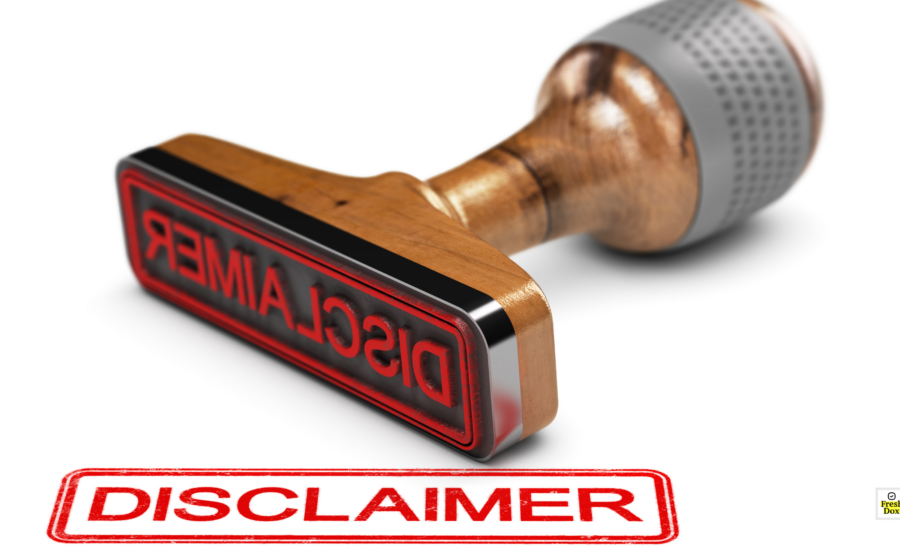
Legal Disclaimer Template for Websites, Blogs, and Online Businesses
 15 Downloads
 Intellectual Property Protection Documents
  March 4, 2025
 FreshDox
Legal Disclaimer Template for Websites, Blogs, and Online Businesses
“No Trespassing” and “Warning” signs are classic disclaimer examples most of us recognise instantly. In the digital world, a legal disclaimer template works in a similar way – it warns, informs, and clearly limits your liability before a problem arises.
In an environment full of fraud, scams, misinformation, and fast-moving content, every serious brand – whether online or offline – needs a clear, written disclaimer to safeguard itself from unnecessary legal risk.
A disclaimer is a short but powerful legal statement that explains what you are – and are not – responsible for. In simple terms, its job is to warn users and set clear limitations of liability. A well-drafted website disclaimer template can protect your business from being blamed for issues that are outside your control.
Disclaimers are not limited to physical property or signboards. Today, businesses use many different types of disclaimers across books, financial advice documents, healthcare content, social media posts, newsletters, landing pages, and full-fledged website disclaimer pages. They give users a realistic expectation of what your product, service, or content can and cannot do – and where your responsibility ends.
Why Every Business Needs a Disclaimer Template
Every industry has its own risk profile, which is why having a flexible, professionally drafted disclaimer template is no longer optional. An e-commerce brand may rely on a warranty disclaimer to limit liability for product misuse. A financial advisory firm may require a strong financial disclaimer to clarify that “past performance is not indicative of future results.” A health coach will usually need a clear medical disclaimer to state that information is educational only, not personalised medical advice.
Without a proper disclaimer of liability, you may be held responsible for damages, losses, or negative outcomes arising from the use of your content, products, or services – even when those events are entirely outside your control. This is precisely what a well-written disclaimer is designed to prevent.
A strong legal disclaimer template helps:
- Avoid misunderstandings about what your business actually guarantees.
- Reduce legal exposure and clarify the limits of your responsibility.
- Manage expectations around results, performance, and third-party content.
- Provide legal support for defending your brand if a dispute or claim arises.
Disclaimers are especially important when you link to or rely on third-party websites, tools, or products. A clear website disclaimer makes it explicit that you do not control or guarantee the accuracy, safety, or effectiveness of third-party content – and that you are not responsible for user comments, reviews, or opinions posted on your site or social media channels.
Types and Uses of Disclaimer
There are several types of legal disclaimers, and most businesses will need more than one. Using a structured disclaimer agreement template from the start ensures you don’t miss critical clauses. Some of the most common types of disclaimers include:
Copyright Disclaimer
A copyright disclaimer informs users that the content they are accessing – such as online courses, PDFs, videos, articles, or books – is protected under copyright law. It clarifies that the material cannot be copied, replicated, modified, or redistributed without permission.
A good copyright disclaimer template protects your intellectual property rights and supports you in issuing copyright notices or takedown requests if someone attempts to copy your work without consent.
Medical Disclaimer
Healthcare and wellness professionals – from doctors and dieticians to fitness trainers and wellness bloggers – should never publish content without a clear medical disclaimer. This is one of the most critical disclaimer examples.
A medical disclaimer clarifies that the information provided is for general informational or educational purposes only and is not a substitute for professional medical diagnosis, treatment, or personalised advice. It helps limit liability if someone misuses general guidance as personalised medical treatment.
Legal Disclaimer
Law firms, consultants, and professional service providers typically rely on a legal disclaimer to clarify the nature of the information they share. For example, website content, blog posts, or newsletters may be legal information but not tailored legal advice.
A strong legal disclaimer template emphasises that general information, sample clauses, or commentary should not be treated as a substitute for one-on-one professional advice. It helps protect the firm from claims that a user relied on generic content as binding legal opinion.
Financial Disclaimer
In a volatile financial market, anyone providing wealth management tips, stock picks, crypto strategies, or investment ideas should use a clear financial disclaimer.
This disclaimer explains that no specific returns are guaranteed and that all investments carry risk. It clarifies that tax consultants, accountants, financial advisors, and investment firms are not responsible for financial losses arising from a client’s independent decisions, even if those decisions were influenced by the content.
Warranty Disclaimer
A warranty disclaimer protects businesses selling physical products, software, or digital downloads. It describes whether the product is sold “as is” or with a limited warranty – and if so, what the terms, conditions, and time limits are.
A well-drafted warranty disclaimer template limits your liability for improper use, user-side damage, or issues that arise after the warranty expires.
Affiliate Disclaimer
An affiliate disclaimer is legally required in many jurisdictions. If you earn a commission, sponsorship, or any form of compensation for promoting products or services, you must clearly disclose this relationship to your audience.
This type of disclaimer is especially important for bloggers, influencers, YouTube channels, and digital marketers participating in programs like the Amazon Associates Program. A compliant affiliate disclosure builds trust by clarifying that you may receive compensation if a user clicks a link or makes a purchase, without guaranteeing results.
Testimonial Disclaimer
Coaching businesses, fitness trainers, online educators, and financial consultants frequently use testimonials and success stories. A testimonial disclaimer clarifies that individual results will vary and that past outcomes do not guarantee future performance.
Without this disclaimer, you risk being held responsible if new clients do not achieve the same results as those highlighted in your marketing material.
Earnings Disclaimer
For websites offering “make money online” courses, business coaching, trading strategies, or side-hustle training, an earnings disclaimer is essential.
This disclaimer states that income examples are illustrative, not typical, and that there is no promise of guaranteed results. In many regions, regulators such as the FTC require such disclaimers when financial outcomes are promoted using case studies or testimonials.
Limitation of Liability Disclaimer
A limitation of liability disclaimer is usually included in your terms and conditions or contract. It restricts the extent to which your business can be held responsible for losses, damages, or claims connected with the use of your website, app, products, or services.
A solid limitation of liability clause is one of the most important parts of a modern website disclaimer template.
Where Should You Display Disclaimers?
Drafting a strong disclaimer is only half the work – it also needs to be clearly visible. Hiding a disclaimer in a dense legal page that nobody can find weakens its effectiveness.
A standard approach is to include key disclaimers within your terms and conditions or privacy policy, then also highlight important disclaimers where the risk actually arises – for example, near medical content, financial calculators, or affiliate links.
To maximise protection, businesses operating both online and offline should display their disclaimer statements across all relevant touchpoints. Strategic locations include:
- Website footer (link to your main disclaimer page).
- Homepage and key landing pages with important legal or financial content.
- Product packaging, instruction manuals, and user guides.
- Service agreements, engagement letters, and client onboarding documents.
- Order confirmation emails and email footers/email disclaimers.
- Printed contracts and physical forms signed by clients or patients.
- Legal policies or FAQ pages summarising your website terms, privacy, and disclaimers.
- Banners and pop-ups (for cookie notices, trading risk alerts, or age-restricted content).
- Sign-up forms for newsletters, courses, or coaching programs.
- End of blog articles containing health, legal, or financial information.
- Checkout pages and payment flows, especially for recurring subscriptions.
- Advertisements, sales pages, and promotional campaigns.
The guiding principle is simple: if a reasonable user might misunderstand or over-rely on your content, product, or service, you should consider adding a relevant disclaimer statement at that touchpoint.
FreshDox.com’s Disclaimer Agreement Template
Disclaimers are a foundational legal tool for modern businesses. To be effective, your disclaimer agreement must be clear, specific, and easy to find. Courts will only respect a limitation of liability if users had a fair chance to read and understand it.
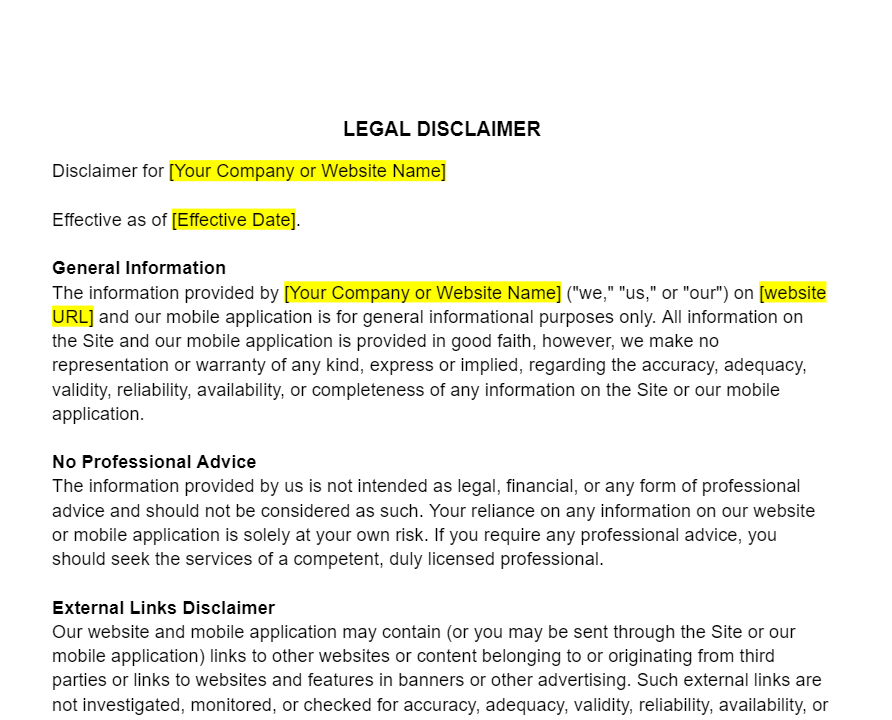
Writing a website disclaimer from scratch can be risky. Missing one important clause or using vague language can leave gaps in your protection. That is where FreshDox.com’s Disclaimer Agreement Template helps you move faster and safer.
Our professionally drafted legal disclaimer template is designed to be:
- Easy to customise – download in an editable format and adapt it to your website, app, or business model.
- Comprehensive – covers key disclaimer types such as medical, legal, financial, affiliate, and limitation of liability clauses.
- Professional – drafted by legal experts so you are not relying on random free samples found online.
When you subscribe to FreshDox.com, you get access not only to our Disclaimer Agreement Template, but also to a full library of ready-to-use business and legal templates – privacy policies, terms and conditions, contracts, waivers, and more. You can even use our disclaimer generator as a starting point, then fine-tune the document to your needs.
We also offer a 14-day trial so you can explore both our Basic and Premium plans. Basic Members can download up to three document templates per month, while Premium Members enjoy unlimited access to the entire template library.
Whether you are a business owner, blogger, influencer, consultant, legal professional, or entrepreneur, FreshDox.com gives you the tools to create a strong, consistent set of policies for your brand. Using our legal disclaimer template helps:
- Protect you from unnecessary liability and legal claims.
- Reduce risk when publishing content or giving general advice online.
- Set clear, professional expectations with your users and customers.
If you are offering medical information, financial guidance, professional services, or consumer products, a clear disclaimer template is a simple step that can save you time, money, and stress in the future.
Sign up with FreshDox.com today, download your website disclaimer template, and put a robust, legally sound disclaimer in place before the next visitor lands on your site.
Popular searches:
- Legal Disclaimer Template for Websites, Blogs, and Online Businesses pdf
- Legal Disclaimer Template for Websites, Blogs, and Online Businesses sample
- Legal Disclaimer Template for Websites, Blogs, and Online Businesses download
- Legal Disclaimer Template for Websites, Blogs, and Online Businesses format
- Legal Disclaimer Template for Websites, Blogs, and Online Businesses template
- Legal Disclaimer Template for Websites, Blogs, and Online Businesses word
- Legal Disclaimer Template for Websites, Blogs, and Online Businesses free

 Download Word Template
 Download PDF Template
Related Templates
Discover more templates that align with your needs and preferences.









Ready to Sign Up?
Start your 7-day free trial and access professionally drafted legal documents built for business use.
- Cancel any time
- 7-day free trial
- From 300+ Customer Reviews
