






Royalty Agreement Template for Licensing Intellectual Property
 9 Downloads
 Finance, Loans & Payment Agreements
  March 10, 2025
 FreshDox
Royalty Agreement Template is the foundation of a secure and transparent licensing relationship. If you are planning to license intellectual property—whether as a licensor or a licensee—you need a clear understanding of how royalties work and how a royalty agreement protects both sides.
A royalty is a payment made to the owner (the licensor or grantor) by another party (the licensee) in exchange for the right to legally use tangible or intangible assets. For example, a company may pay royalties to an individual or another business for the right to use intellectual property, trade secrets, copyrighted works, designs, patents, brands, or access to natural resources.
Because royalties are meant to fairly compensate the original owner, it is important to use a structured agreement whenever those assets are licensed for use. Drafting that contract from scratch can be complex. A robust, professionally written Royalty Agreement Template helps both licensor and licensee document their rights and obligations clearly and consistently.
What is a Royalty Agreement?
A royalty agreement is a formal contract between a licensor and a licensee that sets out the terms and conditions of a licensing arrangement. The Royalty Agreement Template typically covers expectations, responsibilities, and obligations of both parties, as well as the scope of the licence and how royalties will be calculated and paid.
By signing the agreement, the licensor grants the licensee the legal right to use, produce, adapt, distribute, or sell the licensor’s proprietary assets in exchange for royalty payments. These arrangements are widely used wherever licensing intellectual property rights is central to the business model: joint ventures, technology licensing, franchising, publishing, film and television, music, and more.
Royalties are often expressed as a percentage of gross or net revenue generated from the licensed property, in line with applicable laws and industry practice. In some cases, royalties may be agreed as a fixed amount per unit or a lump-sum payment. The actual royalty rate and structure are negotiated between licensor and licensee, and then documented in the royalty agreement along with payment terms, contract duration, scope of use, warranties, and provisions for termination or renewal.
A carefully drafted Royalty Agreement Template protects the licensor’s ownership rights, while still making it clear that the contract is intended to benefit both sides. The licensor can reach new markets and earn royalty income without directly building operations there, while the licensee gains the right to use IP, products, or designs that would otherwise be unavailable—creating revenue opportunities for both.
Why a Royalty Agreement Template is Important
A Royalty Agreement Template is important for both parties because it turns a complex commercial arrangement into a clear, documented framework. As a legally binding contract, it sets out the details of the deal, including:
- Terms and conditions of the licence
- Responsibilities and obligations of both parties
- Scope and limitations of use
- Method of calculating royalties
- Payment terms, schedules, and reporting
- Liabilities and warranties
- Duration of the contract and renewal options
- Severability and other legal boilerplate clauses
- Dispute resolution mechanisms, such as arbitration or mediation
- Provisions for termination of the agreement
Using a standardised Royalty Agreement Template helps ensure that both licensor and licensee act in good faith and that the transaction remains fair and transparent. It communicates all necessary details, protects their interests, reduces the potential for disputes, and helps build trust and confidence in the business relationship.
For the licensor, the agreement ensures that they are compensated appropriately for the use of their assets. It can also allow them to enter new territories or markets without directly investing in infrastructure there. By granting the licensee the right to use their intellectual property under clear conditions, the licensor can earn a share of profits generated from sales while retaining ownership of the property.
For the licensee (also referred to as the assignee or grantee), a royalty agreement is the gateway to using and commercialising another party’s intellectual property. It allows them to manufacture, distribute, or sell products or services they otherwise could not access, in return for agreed royalty payments. If the licence is exclusive, the licensee may even become the only authorised vendor for that IP within a defined territory or channel.
Beyond economics, a structured Royalty Agreement Template provides clarity about roles and responsibilities. It helps reduce confusion, prevents misuse of rights, and encourages compliance with intellectual property laws—reducing the likelihood of expensive legal disputes.
Basic Elements of a Royalty Agreement Template
Royalty agreements can vary depending on the asset, industry, and scope of the licence. However, most well-drafted Royalty Agreement Templates will include the following core elements:
- Parties Involved: Identifies the licensor (the owner of the intellectual property) and the licensee (the user), including their legal names, contact details, and addresses. It will also provide space for signatures or e-signatures of both parties.
- Property Description: Clearly describes the intellectual property, product, or service being licensed, including the nature of the asset and any limits on how it can be used. This helps avoid ambiguity about what exactly is covered.
- Purpose: Explains why the licence is being granted and how the licensed asset may be used—such as for production, distribution, marketing, or sale.
- Scope of Licence: Details the extent of the licence, including permitted uses of the IP, whether the licence is exclusive or non-exclusive, duration, channels, and any territorial or field-of-use restrictions. This is a key section of any Royalty Agreement Template.
- Royalty Rates & Payment Terms: Specifies how royalties are calculated (percentage of net or gross sales, unit-based rates, or fixed fees), payment methods, frequency, reporting requirements, and any advance payments, minimum guarantees, or audit rights.
- Confidentiality and Non-Disclosure: Includes provisions to protect sensitive information shared during the relationship, such as technical data, business plans, or financial information.
- Indemnity and Liability: Sets out how liabilities are allocated, including indemnification obligations if third-party claims arise, and any limitations on liability for each party.
- Termination and Renewal: States the effective date, the duration of the agreement, and conditions under which it may be terminated—such as non-payment, insolvency, or breach. It may also include options or conditions for renewal or extension.
Potential Risks of Not Using a Royalty Agreement Template
Choosing not to use a structured Royalty Agreement Template exposes both licensor and licensee to significant risk. Without clear written terms, parties may rely on assumptions or informal conversations, which can quickly lead to misunderstandings and disputes.
If no formal agreement is in place, there may be confusion over how royalties are calculated, when payments are due, how the IP can be used, or what happens if the relationship ends. This can lead to:
- Distorted or mismatched expectations
- Delays or failures in payment
- Misuse or overreach of usage rights
- Theft or unauthorised copying of intellectual property
- Damage to brand reputation and relationships
- Costly legal disputes or litigation
- Strained or toxic business relationships
When dispute resolution mechanisms are not defined, it can be harder to resolve conflicts efficiently. Questions about royalty calculations, territorial rights, or exclusivity can escalate quickly, undermining what might otherwise have been a profitable collaboration for both parties.
Monetize Your Intellectual Property with FreshDox’s Royalty Agreement Template
A professionally crafted Royalty Agreement Template is essential for both licensor and licensee to build a stable, mutually beneficial licensing relationship. It safeguards the licensor’s ownership rights and the licensee’s usage rights, and it documents royalty calculation methods, payment terms, and reporting standards in a clear, structured format.
FreshDox.com provides a carefully drafted Royalty Agreement Template that helps you turn intellectual property into a reliable revenue stream while maintaining control and compliance. The template is designed to cover the practical and legal points that matter most—scope of licence, royalty rates, IP protection, and dispute resolution—without forcing you to start from a blank page.
At FreshDox, you can access a wide collection of business and legal document templates, including a meticulously prepared Royalty Agreement Template created by experienced legal and subject-matter professionals. Once you create an account, you can download the documents you need in both Word and PDF formats and adapt them to match your specific licensing arrangements.
Whether you are a creator, rights holder, or a business looking to license valuable intellectual property, FreshDox.com’s Royalty Agreement Template helps you document royalties, manage risk, and monetise your assets confidently.
Popular searches:
- Royalty Agreement Template for Licensing Intellectual Property pdf
- Royalty Agreement Template for Licensing Intellectual Property sample
- Royalty Agreement Template for Licensing Intellectual Property download
- Royalty Agreement Template for Licensing Intellectual Property format
- Royalty Agreement Template for Licensing Intellectual Property template
- Royalty Agreement Template for Licensing Intellectual Property word
- Royalty Agreement Template for Licensing Intellectual Property free
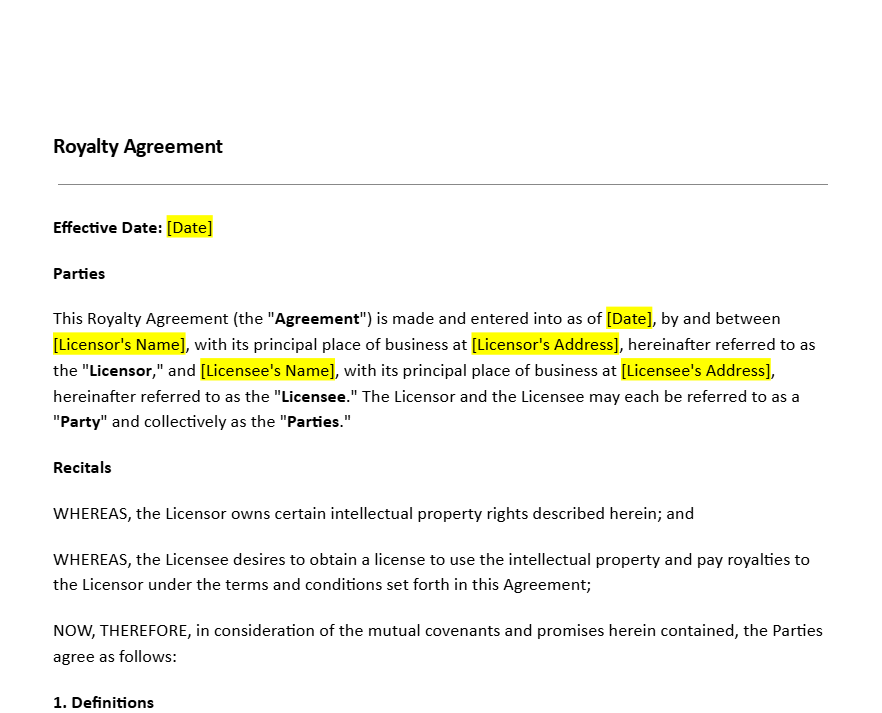

 Download Word Template
 Download PDF Template
Related Templates
Discover more templates that align with your needs and preferences.









Ready to Sign Up?
Start your 7-day free trial and access professionally drafted legal documents built for business use.
- Cancel any time
- 7-day free trial
- From 300+ Customer Reviews
